Table Of Content
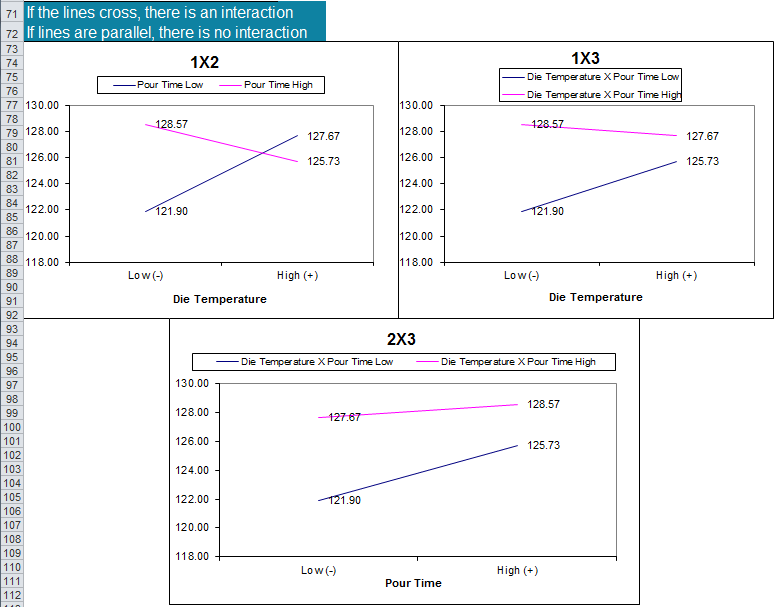
So the selected experimental plan will support a specific type of model. Remember to let your DOE campaign stage guide your design choices. It can also be helpful to think about how much work you can actually do—and find a design that fits your budget. Typically, if you have an unmanageable number of runs, you’ve likely picked the wrong design. It’s easy to get overwhelmed by all the design choices that most DOE software gives you. Most DOE software, especially our own, is also there to help guide you.
3 Microreactor Experiments to Watch Starting in 2026 - Energy.gov
3 Microreactor Experiments to Watch Starting in 2026.
Posted: Wed, 13 Dec 2023 08:00:00 GMT [source]
Software Tools and Technologies for Design of Experiments
This will provide information as to potentially significant factors without consuming your whole budget. Once you’ve identified the best potential factors, you can do a full factorial with the reduced number of factors. A full factorial design provides information about all the possible interactions.
Fractional Factorial Design
Kishen in 1940 at the Indian Statistical Institute, but remained little known until the Plackett–Burman designs were published in Biometrika in 1946. R. Rao introduced the concepts of orthogonal arrays as experimental designs. This concept played a central role in the development of Taguchi methods by Genichi Taguchi, which took place during his visit to Indian Statistical Institute in early 1950s. His methods were successfully applied and adopted by Japanese and Indian industries and subsequently were also embraced by US industry albeit with some reservations. It is best that a process be in reasonable statistical control prior to conducting designed experiments.
Quality Assurance Training
By eliminating potential bias, randomization safeguards the truthfulness of the experimental outcomes, making the findings generalizable and credible. The ethical considerations in research design form the bedrock of DoE. They are the safeguards that ensure research not only advances knowledge but does so with respect for the subjects involved, the data collected, and the ecosystems within which research is conducted. These considerations demand transparency, consent, and honesty, upholding the values of respect and dignity in every phase of the experimental process.
Examples and Applications of Experimental Design
They can also help you identify when technical restrictions apply and avoid making the wrong choice. Instead of trying to fit your DOE campaign into a single experiment, think of the DOE process as a collection of sub-experiments. And for each sub-experiment, you might use a different design—as every type of DOE design at each step is intimately linked to a phase in the DOE campaign. They can move you rapidly from your initial “thought experiment” to optimized conditions and robust data. There’s also a whole other way of doing designs, where you use software to create a bespoke design to your exact requirements. These are called optimal designs, and it’s a topic for another day.
At any stage in your DOE campaign, you could take your pick from several designs, depending on your assumptions, goals, available run numbers, and so on. The number of possible designs on offer can sometimes seem a bit overwhelming. The variance of the estimate X1 of θ1 is σ2 if we use the first experiment. But if we use the second experiment, the variance of the estimate given above is σ2/8. Thus the second experiment gives us 8 times as much precision for the estimate of a single item, and estimates all items simultaneously, with the same precision. What the second experiment achieves with eight would require 64 weighings if the items are weighed separately.
The Electrospray ionization (ESI) source is commonly used for identifying heteroatomic compounds (N, O, S) in crude oil. The high complexity of the sample provides a wealth of information, and therefore, processing and visualization programs are used to facilitate data interpretation. Several experimental configurations of parameters exist for the acquisition of ESI(+)FT-ICR MS and ESI(-)FT-ICR MS of crude oils. In this context, the design of experiments can help obtain optimal test conditions. Global desirability was used as a response parameter obtained from MS data (resolution, signal-to-noise ratio, signal-to-charge ratio signal with highest absolute intensity, total signals, low mass error, and high mass error). The study found that concentration and flow rate were the most significant experimental parameters for ESI(+), while for ESI(-), TOF and CV were the most significant experimental parameters.
Book traversal links for 1.3 - Steps for Planning, Conducting and Analyzing an Experiment
You need to have a deliberate process to eliminate potential biases from the conclusions, and random assignment is a critical step. If you have a treatment group and a control group then, in this case, you probably only have one factor with two levels. Run all possible combinations of factor levels, in random order to average out effects of lurking variables. A more effective and efficient approach to experimentation is to use statistically designed experiments (DOE).

After viewing them, the customer then ranked the different mockups from most preferred to least preferred. The ranking provided the numerical value of that combination. To keep matters simple, they went with a quarter fraction design, or 16 different mockups. Otherwise, you’re asking customers to try and differentiate their preference and rank way too many options. Your process variables have different impacts on your output. We usually talk about "treatment" factors, which are the factors of primary interest to you.
For example, in the first experimental series (indicated on the horizontal axis below), we moved the experimental settings from left to right, and we found out that 550 was the optimal volume. In order to understand why Design of Experiments is so valuable, it may be helpful to take a look at what DOE helps you achieve. A good way to illustrate this is by looking at an alternative approach, one that we call the “COST” approach. The COST (Change One Separate factor at a Time) approach might be considered an intuitive or even logical way to approach your experimentation options (until, that is, you have been exposed to the ideas and thinking of DOE).
Design of Experiments is a framework that allows us to investigate the impact of multiple different factors—changed simultaneously—on an experimental process. Our school teachers advocated a one-factor-at-a-time (OFAT) approach to scientific experimentation. So, pick a variable (factor) and vary the value (levels), while keeping everything else constant. An alternative scenario might occur if patients were randomly assigned treatments as they came in the door. At the end of the study, they might realize that drug A had only been given to the male subjects and drug B was only given to the female subjects. You would not have any reliable conclusion from this study at all.
Advice on "Lack of fit" and "replicate" points for an I Optimal Design of Experiments? - ResearchGate
Advice on "Lack of fit" and "replicate" points for an I Optimal Design of Experiments?.
Posted: Mon, 16 May 2022 07:00:00 GMT [source]
Performing a DOE can uncover significant issues that are typically missed when conducting an experiment. Numerous quantitative factors (e.g. hours of sunlight, grams of plant food, and liters of water) or qualitative factors (e.g. the cultivar) can influence the strawberry crop (Figure 2). DOE helps avoid unconscious cognitive bias and allows researchers to look behind the curtain of biological complexity to see what’s really going on.
Let's make it easy and say that there are 10 male and 10 female subjects. A balanced way of doing this study would be to put five males on drug A and five males on drug B, five females on drug A and five females on drug B. This is a perfectly balanced experiment such that if there is a difference between male and female at least it will equally influence the results from drug A and the results from drug B.
This evolved in the 1960s when medical advances were previously based on anecdotal data; a doctor would examine six patients and from this wrote a paper and published it. The incredible biases resulting from these kinds of anecdotal studies became known. The outcome was a move toward making the randomized double-blind clinical trial the gold standard for approval of any new product, medical device, or procedure. The scientific application of the statistical procedures became very important.
Blocking is a technique to include other factors in our experiment which contribute to undesirable variation. Much of the focus in this class will be to creatively use various blocking techniques to control sources of variation that will reduce error variance. For example, in human studies, the gender of the subjects is often an important factor.
A perfect cup of tea depends on multiple other factors, such as the blend, brewing time, and the addition of sugar. In other words, making a perfect cup of tea is complex and multidimensional. DOE allows researchers to investigate the effect of changing multiple factors simultaneously. One of the most important requirements of experimental research designs is the necessity of eliminating the effects of spurious, intervening, and antecedent variables. But there could be a third variable (Z) that influences (Y), and X might not be the true cause at all. Z is said to be a spurious variable and must be controlled for.



No comments:
Post a Comment